
Idle Boxer
Tap NineSimulation
4.4170.00 Reviews
- Version
- 1.21.1
- Installs
- 100.00K
- Age Rating
- Everyone 10+
Screenshots
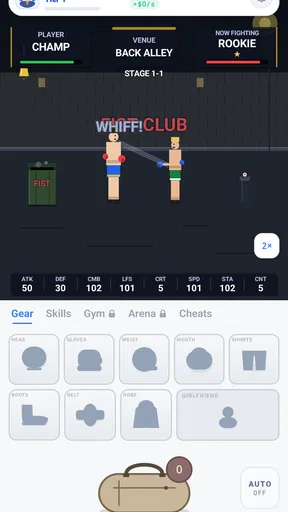
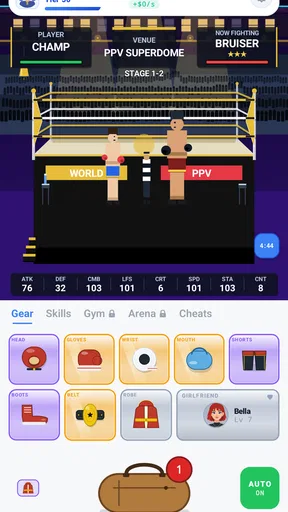
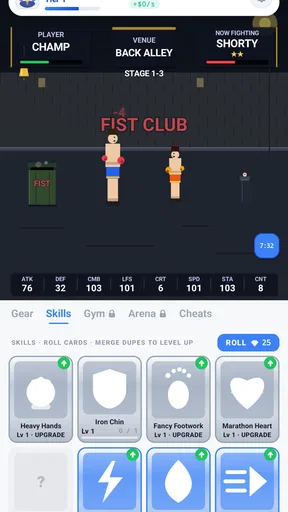

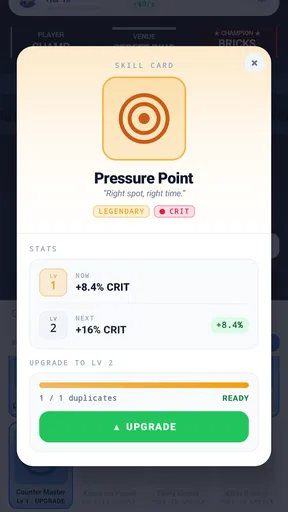
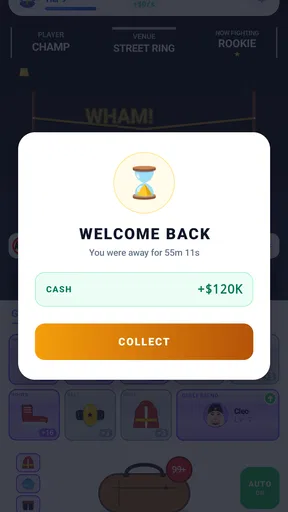
Our Review of Idle Boxer
 Analysis by Appyee
Idle Boxer is the kind of simulation game I open when I want boxing flavor without committing to a full match. Its central appeal is easy to understand: you guide a boxer’s rise from an ordinary street fighter toward a more legendary career, while the game handles the relaxed, incremental rhythm associated with idle play. That makes it approachable, but it also creates a particular kind of friction: the most important decisions are often about timing, attention, and knowing when to stop tapping rather than about controlling every punch.
Tap Nine has positioned this as a free game for players who enjoy watching progress build over short sessions. I found it most comfortable as a companion game rather than a main event. It works well during a commute, while waiting for an appointment, or in the few minutes before bed. The question is not whether it offers the depth of a dedicated boxing simulator—it does not—but whether its gradual career fantasy gives you enough reason to return. For me, the answer depends heavily on how patient you are with idle progression and how carefully you manage the moments when active input matters.
Where players are most likely to get stuck
The first surprise is that the boxing theme can suggest more direct action than the game’s structure actually provides. Someone coming from a traditional fighting game may expect timing-heavy combinations, movement, defense, and a strong sense of personal control. Here, the attraction is closer to building momentum over time. You watch your boxer advance, make choices that support progress, and return later to continue the climb.
That difference matters because it changes what “winning” feels like. In a conventional boxing game, a poor round may be your fault because you missed an opening or mistimed a guard. In an idle boxer, a slowdown may instead mean that your current progress is no longer efficient. The useful response is usually to inspect what can be improved, rather than repeatedly pressing the same action and hoping for a different result.
I also found that the early rhythm can feel slower than expected if you approach it looking for immediate spectacle. The store summary points toward a journey from street fighter to boxing legend, but the satisfying part is the accumulation of small improvements, not a constant stream of dramatic fights. Players who enjoy incremental games will recognize that loop quickly. Players who need frequent new mechanics or uninterrupted action may feel that the game is asking them to wait too often.
A practical mistake is treating every available action as equally valuable. In idle games, attention is a limited resource even when the game itself is designed to keep moving. I recommend checking what directly improves your current bottleneck before spending time on secondary actions. If progress is slow because your boxer cannot handle the next challenge, strengthening the relevant part of the progression path is more useful than scattering effort across everything that happens to be available.
Another point of friction is the boundary between active play and passive progress. If you expect the game to replace a full session with automatic advancement, you may be disappointed by how much satisfaction comes from returning at the right moment and making a small adjustment. If you expect to control every exchange, you may be disappointed for the opposite reason. The best mindset is to treat it as a light management game with boxing presentation.
Why the idle format changes the boxing fantasy
The appeal is not realism. There is no need to learn a complete combat system before the game becomes enjoyable. Instead, the boxer’s career is presented as a sequence of progress decisions, which makes the game accessible to people who like sports themes but do not normally play fighting games.
That accessibility is also the main trade-off. The less direct control you have, the less room there is for mechanical mastery. I would choose a traditional boxing game if I wanted to practice reactions, read an opponent, or feel responsible for every round. I would choose this one when I wanted a calmer loop that could be checked in brief bursts.
Setup checks that prevent avoidable trouble
Before judging the game, I would start with the basic compatibility check. It runs on Android devices using version 8.0 or later, so an older phone may be the first reason for installation trouble. On a compatible device, I would also make sure there is enough free storage and that the operating system is not in an unusually restricted state. Those are simple checks, but they eliminate a surprising number of false alarms when a game will not install or behaves poorly on first launch.
The current version is 1.21.1, and keeping the installation current is sensible when dealing with a progression game. Updates can affect stability and the way saved progress is handled, even though I would not assume that every update changes the gameplay in a noticeable way. If the game opens but appears stuck during loading, I would first close it completely, reopen it, and check whether the device has a reliable connection before taking more drastic steps.
I would avoid clearing app storage as an early troubleshooting move. In a game built around gradual progress, deleting local data can create a much bigger problem than a temporary loading delay. A safer order is to restart the app, restart the phone, confirm that the installation is complete, and only then consider more disruptive measures. If you are using a device with aggressive background restrictions, allowing the game to behave normally in the background may also help its idle rhythm, but I would not change system settings unless the game is actually failing to progress.
The game is free to install, which makes trying it relatively low-risk. However, the presence of optional purchases ranging from $4.99 to $99.99 per item means I would decide on a spending boundary before playing. That is especially useful in an idle game, where impatience can make a shortcut feel more valuable than it really is. I prefer to play for a while first, learn the normal pace, and only then decide whether any purchase improves my experience rather than merely reducing waiting.
Its Everyone 10+ content rating makes it a reasonable choice for a broad audience, but parents should still explain that free games can include optional spending. The rating answers one question about suitability; it does not replace a conversation about purchases or screen time. For younger players, I would pair the game with device-level purchase controls rather than relying on good intentions during a tempting progression wall.
A sensible first-session routine
My preferred opening routine is deliberately conservative. I let the game establish its basic loop, observe what produces the clearest improvement, and avoid spending anything until I understand the difference between ordinary progression and a paid shortcut. I also pay attention to whether the game feels enjoyable when checked briefly. If it only feels rewarding after long stretches of waiting, that tells me more about fit than any early burst of progress.
It helps to decide what kind of player you are before settling into the game. If you want a background activity, keep sessions short and return when you naturally have a spare moment. If you want an active boxing challenge, test the game honestly for a short period and move on if the indirect format already feels disappointing. No setup adjustment can turn an idle simulation into a conventional fighting game.
Recovering a stalled workflow without losing patience
When progress appears to stop, I would first distinguish between a technical problem and a normal progression slowdown. A real technical problem often affects basic responsiveness: the game may fail to open, freeze during a transition, or stop responding to input. A normal slowdown usually leaves the game usable while advancement simply becomes less satisfying. Those situations need different responses.
For a technical stall, I would close the game, reopen it, and check the device’s connection and available space. I would then see whether other apps are consuming unusual resources and restart the device if necessary. These are intentionally general steps because they are safe across ordinary Android setups and do not risk erasing progress. I would not repeatedly reinstall the game as a first response, especially when the value of local progress is important.
For a gameplay stall, I would stop treating the current obstacle as something that must be forced immediately. Idle progression often rewards stepping back, allowing the normal loop to accumulate, and returning with a clearer view of what needs attention. A useful habit is to make one meaningful adjustment at a time. If you change everything together, you lose the ability to tell which decision actually improved the result.
This is also where short sessions become more effective than constant checking. Opening the game every minute can make slow progress feel worse because you are measuring tiny changes. I get a better sense of the loop by checking at natural intervals: after finishing another task, during a break, or when I am ready to make a deliberate decision. That turns waiting into part of the structure instead of a source of irritation.
Another practical insight is to separate enjoyment from optimization. You do not need to find the perfect route through every upgrade or progression choice to have a good time. If the game remains pleasant while you make reasonable decisions, keep playing. If you find yourself treating every pause as a mistake and every purchase as a solution, the idle design may be working against your expectations.
Handling purchases and progression pressure
I would be particularly cautious around expensive individual purchases. The upper end of the listed purchase range is substantial for a casual mobile game, and an idle loop can make immediate progress feel emotionally urgent. My advice is to use the free experience as a test of the core loop. If the basic climb is not enjoyable, paying to accelerate it will not fix the underlying mismatch.
For players who do spend, a fixed personal limit is more useful than deciding in the moment. Think of a purchase as paying for convenience, not as proof that the game is impossible without it. That distinction keeps the decision practical. It also makes it easier to stop when the game has already delivered the amount of entertainment you wanted.
Families should be even more deliberate. A child may understand that the game is free while not fully understanding that optional items can cost real money. Device purchase restrictions and a clear rule about asking first are sensible companions to the game. This is not a criticism unique to the boxing theme; it is simply more important when progression is designed to make the next improvement feel close.
When the app is not the cause of the problem
Not every disappointing session points to a fault in the game. A phone with limited free space, an unstable connection, heavy background activity, or an outdated operating system can make any mobile title feel unreliable. Before blaming the game, I would test whether other apps are also slow, whether the device is unusually warm, and whether the problem disappears after a restart. Those clues help separate a local device issue from a game-specific one.
Expectations can also create a false diagnosis. If you installed this hoping for a hands-on boxing simulator, the lack of direct combat may feel like a malfunction even when the game is behaving as designed. The store short description calls it an idle boxer, and that small phrase is important. It signals that the main activity is progression management rather than a complete round-by-round fighting system.
The same applies to background progress. If you expect constant advancement while the game is closed, you may interpret a slower return as a technical failure. I would first observe the game’s normal rhythm over several ordinary sessions before deciding that something is wrong. Mobile operating systems can limit background activity, and different devices handle idle behavior differently. A fair review of the experience has to account for that context.
There is also a personal-fit issue that no troubleshooting can solve. Players who love competitive timing, manual combos, story-heavy careers, or realistic sports presentation will probably find better alternatives in dedicated boxing or fighting games. Those games offer more control and often make each match feel like a self-contained test of skill. This title is better suited to someone who enjoys the fantasy of improvement without needing to perform every punch.
On the other hand, fans of complex management simulators may find it too light. If you want detailed training plans, deep financial decisions, or a carefully modeled boxing organization, an idle structure may feel simplified. Its strength is that it reduces the workload. Its weakness is that the reduction also limits the number of meaningful decisions available at any one time.
Who will get the most from it
I can see this working especially well for a player who wants a low-pressure game to revisit throughout the day. Imagine waiting for a bus with only a few minutes available: you open the game, collect the sense of accumulated progress, make one sensible improvement, and close it again. That scenario suits the design far better than sitting down expecting a long, dramatic boxing session.
It is also a decent entry point for someone curious about idle games but more interested in sports than fantasy kingdoms, factories, or generic business themes. The boxing career gives the numbers and progression a clear emotional frame. You are not simply watching an abstract meter rise; you are imagining a fighter moving upward through a career.
I would skip it if the word “idle” already sounds frustrating. I would also skip it if you need strong offline certainty, detailed control over every match, or a game that rewards fast reflexes. Even a polished idle loop cannot satisfy a player who wants the physical feeling of boxing. Choosing the right alternative is not about which game is objectively better; it is about whether you want management, automation, or direct competition.
My practical verdict after living with the loop
Tap Nine’s game is a focused simulation built around the pleasure of gradual boxing progress. Its free entry point, broad age rating, and modest device requirement make it easy to try, while its current 4.4 average from around 3.4 thousand ratings suggests that the basic concept has connected with a meaningful player base. It has also passed over 100 thousand installs, which gives it a visible community without making the game feel like an unavoidable mainstream title.
Those figures are useful context, but they do not answer the most important question: will you enjoy checking on a boxer more than controlling one? My answer is yes for short, relaxed sessions, especially when I want a game that can sit beside the rest of my day. I would not use it as my only boxing game, because the indirect structure cannot provide the tension of a manual fight or the depth of a full sports simulation.
The biggest practical recommendation is to protect the game’s relaxed nature. Use short check-ins, make deliberate progression choices, and do not let a slowdown push you into purchases before you understand the normal pace. If the app appears technically stuck, begin with safe device and connection checks instead of deleting local data. If the game feels emotionally stuck because progress is gradual, decide whether patience is part of the appeal for you.
My bottom line is simple: choose Idle Boxer for a lightweight career-building loop with boxing style, not for a traditional fighting experience. It is free to start, easy to sample, and specific enough to give idle progression a recognizable theme. Its limitations are equally clear: less direct control, less mechanical skill, and possible pressure around waiting or optional spending. For the right player, that balance makes it a pleasant background game. For someone seeking authentic ring control, a dedicated boxing alternative will be the better choice.
As a final note, the developer is Tap Nine, and the game is available for devices running Android 8.0 or later. I would install it when I wanted an uncomplicated simulation that could fill small gaps in the day, then judge it by whether those brief returns feel rewarding without spending. If they do, the climb from street fighter toward boxing legend has enough charm to keep going. If they do not, no amount of optimization will make the idle format feel like the sport you originally wanted.
Verdict
Strengths of Idle Boxer
- Simple controls make it easy to start playing immediately.
- Idle rewards let progress continue while you are away.
- Short sessions fit well into spare moments.
- Character upgrades create a satisfying sense of progression.
- Lightweight gameplay runs well on many mobile devices.
Limitations of Idle Boxer
- Progress can feel repetitive after extended play.
- Higher upgrades may require considerable grinding.
- Ads can interrupt the flow unless removed or limited.
- Limited combat depth may disappoint experienced players.
- Offline earnings may be capped between play sessions.
Similar Picks in This Category
View All
Truckers of Europe 3
Wanda Software4.3

Town Building Life Simulator
XGame Global4.2

Fidget Toys Trading・Pop It 3D
Freeplay Inc4.7

Sculpt People
CrazyLabs LTD4.4

Scary Teacher 3D
Z & K Games4.2

Hair Tattoo: Barber Shop Game
CASUAL AZUR GAMES4.3
Frequently Asked Questions
What is Idle Boxer and how does the gameplay work?
Idle Boxer is an incremental boxing game focused on training fighters, improving their statistics, and earning rewards over time. You tap or manage training activities to increase strength, speed, endurance, and income, then use those resources to progress through tougher opponents. The idle system allows your boxer to continue generating progress even when you are not actively playing, although regular sessions help you upgrade faster.
Can I play Idle Boxer without an internet connection?
Some parts of Idle Boxer may remain accessible offline, particularly basic training and idle progression, but the exact functionality can depend on the version installed and the device platform. Features such as advertisements, cloud synchronization, events, leaderboards, or in-app purchases generally require an internet connection. It is best to launch the game online occasionally so rewards and progress can synchronize correctly.
Is Idle Boxer free to download and play?
Idle Boxer is generally available as a free download, allowing players to begin training and progressing without paying upfront. However, the game may include optional in-app purchases for currency, boosts, premium items, or faster upgrades. Advertisements may also appear during play, sometimes offering optional rewards. You can usually enjoy the core experience for free, but progress may feel slower without purchases or rewarded ads.
Does Idle Boxer contain advertisements or in-app purchases?
Yes, players should expect Idle Boxer to use common free-to-play monetization features, including advertisements and optional in-app purchases. Watching an advertisement may provide extra currency, temporary boosts, or other useful rewards, while purchases can speed up training and progression. These features are not normally required to try the game, but users who prefer an uninterrupted experience should review the available settings and store information before downloading.
Is Idle Boxer suitable for children and casual players?
Idle Boxer is designed to be easy to understand, with straightforward controls and a progression system that suits short play sessions. Casual players can check in briefly to collect rewards, improve their boxer, and start new training activities. Parents should still check the listed age rating and review advertising and purchase options, since the game may include promotional content and optional transactions that could require device-level restrictions.
Play our best games!


